3859 Battleground Ave, Suite 300, Greensboro, NC

Water Distribution Design

Reliable water systems designed for adequate domestic and fire flow, coordinated directly with local utility authorities to prevent delays during permitting and construction.

Why Water Infrastructure Matters for Development

Reliable water service is fundamental to any development project. Without adequate domestic water pressure, flow, and fire suppression capability, development cannot proceed. Poor water system design creates multiple problems: inadequate water pressure for occupant use, insufficient fire flow for fire protection, utility authority rejection of proposed extensions, and costly redesigns after permit review.

Water system design is often overlooked during early-stage development planning, only to become a critical constraint during detailed design. Projects with inadequate fire flow or water pressure must be redesigned, utility extensions must be enlarged, and schedule delays follow. Evaluating water availability and infrastructure requirements early in site selection prevents these costly surprises.

Hagen Engineering approaches water system design as an integral component of site development. We evaluate existing water system capacity, design new extensions and service laterals, calculate required fire flow and domestic demand, coordinate with local water authorities, and produce permit-ready water utility drawings.

Our water system designs account for long-term future growth, not just immediate project demands. Systems sized only for current phase fail when adjacent land develops. We design with scalability — ensuring phased development can be accommodated without expensive future infrastructure replacement.
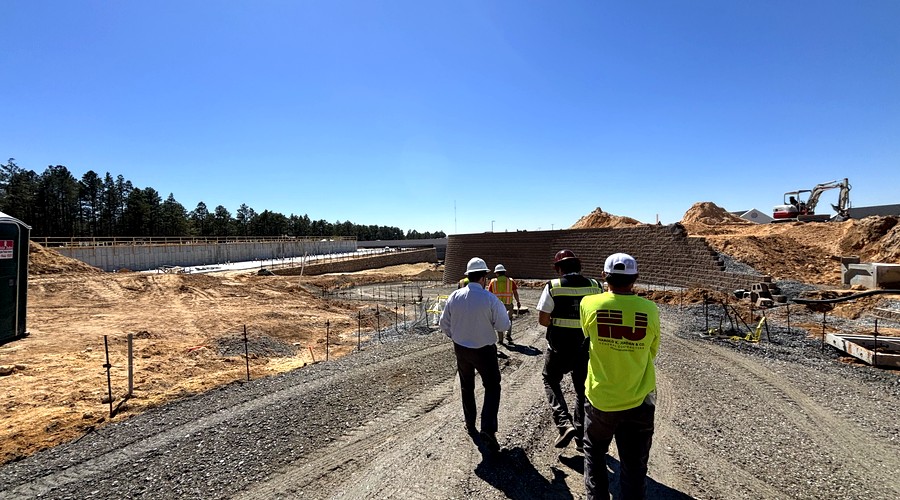
Water distribution system design and utility coordination for land development

Water Line Routing, Sizing & Hydraulic Design

Water line routing must balance multiple competing objectives: minimizing main length and cost, accommodating site topography and utilities, maintaining adequate pressure and flow throughout the system, and providing redundancy for reliability.

We perform hydraulic analysis using Hardy-Cross iteration or equivalent software to model pressures and flows throughout the proposed water system. These calculations account for line friction losses, elevation changes, and demand patterns to ensure adequate water pressure at all service points under maximum demand conditions.

Pipe sizing considers both immediate project requirements and future phases. Undersized mains create pressure deficiencies; oversized mains waste capital and ongoing pumping costs. We size lines to maintain design pressures (typically 40-80 psi in the Southeast) under maximum demand, accounting for future growth capacity.

Water line routing follows site grading and utility conflicts to minimize construction cost and future maintenance issues. We coordinate with stormwater management, sanitary sewer, and other utilities to establish clear utility corridors. Routing avoids conflicts with buildings, parking areas, and landscaping that would complicate future access.

All water mains include shut-off valves at appropriate intervals, blow-offs for air release and sediment removal, and clean-outs for system maintenance. These details are crucial for reliable long-term water system operation and are specified in permit drawings and construction documents.

Water main routing and utility coordination plan

Fire Flow Analysis & Hydrant Placement

Fire protection is a critical water system requirement. Building and Fire Codes require minimum fire flow based on occupancy type and building size. Insufficient water pressure or flow results in permit denial or sprinkler system installation (adding substantial cost to buildings).

We calculate required fire flow based on IRC/IFC requirements and local fire department standards. Fire flow calculations account for building area, construction type, hazard classification, and other factors. Results determine minimum water main size and pressure requirements.

Hydrant placement follows standard spacing (typically 300-500 feet between hydrants) and accessibility requirements. Hydrants must be located to serve fire apparatus staging and provide adequate reach to all building faces. Placement also accounts for site topography, utility conflicts, and accessibility for maintenance vehicles.

Fire flow testing is often required by water authorities and local jurisdictions to confirm that the system can deliver specified flow at required pressure. We coordinate fire flow testing with water authorities and ensure designs are validated before construction.

We work closely with fire departments and building officials to confirm that proposed water systems meet all fire protection requirements. Early coordination prevents permit delays and ensures that design meets authority expectations before detailed drawings are completed.

Fire hydrant placement plan and fire flow analysis

Meter Sizing, Service Laterals & Connection Design

Individual service connections from main lines to buildings require careful sizing and detailing. Meter selection, lateral diameter, and internal building supply must be coordinated to provide adequate flow and pressure for intended use.

We size service laterals based on fixture count, demand profile, and code requirements. Undersized laterals create pressure loss and inadequate water pressure to upper floors; oversized laterals waste resources. Sizing follows standard fixture unit methods per plumbing code to determine appropriate lateral diameter.

Meter selection accounts for domestic demand, irrigation demand (if applicable), and future expansion. Meter specifications include meter type (turbine, compound), size, connection details, and testing requirements. We coordinate meter specifications with water authority requirements — some authorities mandate specific meter models or manufacturers.

Service lateral routing must be clear of other utilities, accessible for future maintenance, and protected from freezing in cold climates. We detail service laterals in plan and profile views, showing depths, thrust blocks, valve locations, and connections to building supply.

All service connections are sized and specified with shut-off valves, pressure reducing valves (where required), and backflow prevention devices to protect public water supply from contamination. These details are critical for code compliance and public health protection.

Water service lateral design and meter sizing details

Backflow Prevention & Water Quality Protection

Backflow prevention is required to protect public water supplies from contamination. Cross-connection control regulations mandate backflow prevention at various points in water systems, depending on hazard levels and use types.

Reduced pressure zone (RPZ) devices are required for high-hazard applications (medical facilities, laboratories, industrial facilities). Double-check valves are sufficient for lower-hazard connections (irrigation systems, lawn watering). We specify appropriate backflow prevention based on local codes and water authority requirements.

Backflow prevention devices require regular testing and maintenance. We detail device locations in drawings, specify testing requirements, and coordinate with water authorities on maintenance procedures. Improper backflow prevention design or inadequate maintenance can result in water authority rejection or public health violations.

Our water system designs integrate backflow prevention from initial concept. Rather than adding devices as an afterthought, we design systems with appropriate cross-connection control from inception, reducing cost and ensuring compliance.

Irrigation systems, cooling towers, and other ancillary water uses receive particular attention to backflow prevention. We specify isolation, check valves, and cross-connection control appropriate to each use, ensuring both code compliance and public health protection.

Backflow prevention device specification and water quality protection

Utility Authority Coordination & Approvals

Water system design requires coordination with local water authorities, utility companies, and reviewing agencies. Each authority maintains specific design standards, approval processes, and technical requirements. Failing to coordinate early results in permit rejections and expensive redesigns.

We conduct early conversations with water authorities to confirm system approach, main sizing, hydrant spacing, and service connection standards. These pre-application meetings establish authority expectations before detailed design, preventing surprises during permit review.

Many water authorities maintain GIS maps of existing water infrastructure. We obtain these maps and coordinate proposed extensions to work with existing systems efficiently. Extensions that parallel existing mains or create system redundancy are often rejected or require modification.

Water authority approval of proposed extensions typically requires demonstration of adequate capacity in existing mains, calculation of system pressure impacts, and confirmation of long-term operational feasibility. We provide all required information to support authority approval.

We maintain relationships with water authorities throughout the Southeast, understanding each authority's unique requirements, approval timelines, and design preferences. This institutional knowledge accelerates permit approval and ensures designs that authorities will accept.

Water system extension agreement and utility authority coordination

Water System Extension Agreements & Acceptance

Water systems designed for new development are typically extended or enlarged to serve the project. These extensions are eventually accepted into public ownership and maintained by the water authority. Designing for future acceptance requires attention to construction standards, materials, and documentation that authorities require.

Extension agreements define the relationship between developer and water authority. These agreements specify design standards the system must meet, material requirements (pipe types, fittings, specifications), testing requirements, and procedures for authority acceptance. Understanding and designing to authority extension agreement requirements is essential.

Most water authorities require that extensions be constructed to standards enabling future public maintenance without replacement. This means appropriate materials, adequate depth for freeze protection, and accessibility for future repair. Systems designed only for short-term private use may not meet authority standards and require costly modifications.

We design water systems to meet water authority standards for public acceptance. By designing for long-term public maintenance from inception, we avoid expensive modifications or system replacement after construction.

Final authority acceptance requires successful pressure tests, water quality samples, and field inspection. We coordinate all testing and documentation required for final acceptance, ensuring smooth transition from private construction to public ownership.

Water system construction standards and public utility acceptance

Ready to Design Your Water Infrastructure?

Let our water systems engineers evaluate your development and design reliable water infrastructure that meets fire protection and domestic supply requirements.